Tata Group Decline After Ratan Tata Death: The end of Ratan Tata’s era on October 9, 2024, was like the sunset of the era for the Tata Group, the conglomerate that is generally known to be one of the finest in India. His way of leading the company was very much in line with moral business standards, spreading the business globally, and bringing in new things. But, share prices of the Tata Group have declined significantly within a year after his death. The article explains the contributing factors leading to the fall of the Tata Group shares, giving up the knowledge to the investors and other stakeholders.
It was Ratan Tata’s death that caused the stocks of the Tata Group to go up initially, and the investors thus paid homage to his legacy. However, the last several months have seen the rebound of the stocks. The company’s market cap as of October 2025 has shrunk by more than ₹7 lakh crore, a 21% drop compared to the year before. This article digs into the main reasons for the fall of the stock price that in the first place are the issues of internal governance, the problems of the sector, and the broader market dynamics.
Internal Governance Challenges
Leadership Succession and Boardroom Turmoil
One of the major reasons for the fall of Tata Group share prices has been the fight inside Tata Trusts among themselves. Tata Trusts being the charitable arm has the majority stake in Tata Sons and the disagreement was about the control of the group and the change of the leader. The disputes spiraled so far that the Indian government had to interfere and mediate which it did not do lightly thereby indicating the impact these troubles have had on investor confidence.
It was a clear indication of the discord within the Trusts when in September 2025 the board of Tata Sons decided not to reappoint a key trustee. The turmoil inside the Trusts has caused the shareholders to worry about the group’s leadership and strategic direction which has had a negative effect on the stock prices.
Sector-Specific Challenges
Tata Consultancy Services (TCS)
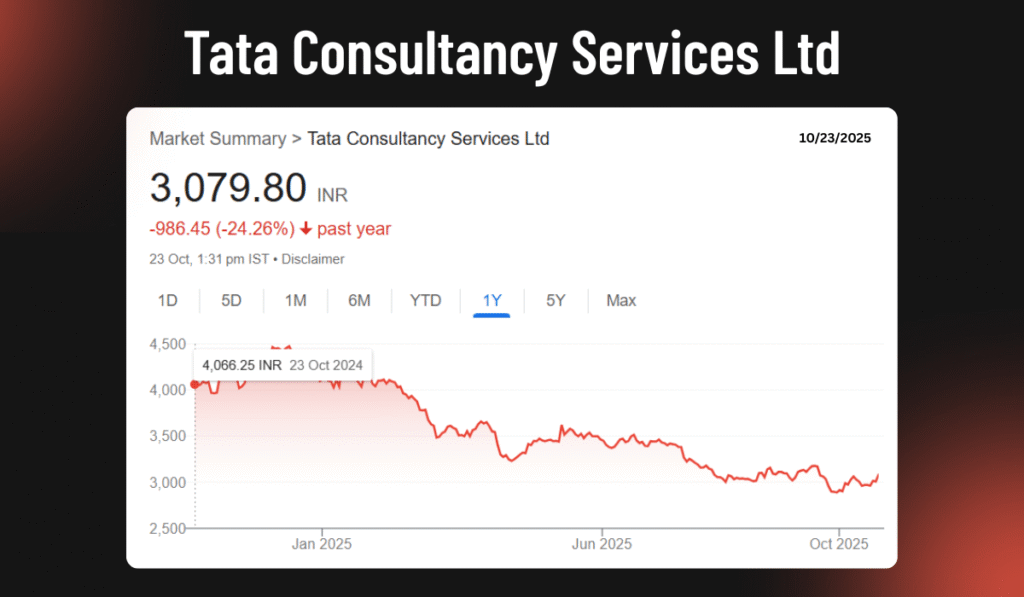
Being the premier IT services company of the group, TCS has encountered a lot of roadblocks over the last year. The company saw its market capitalization fall by as much as 34%, which is, in fact, the worst performance it has made since the 2008 financial crisis. Economic issues and a fall in the demand for IT services contributed to the problems faced in the company, while there were also challenges inside the company in the area of execution.
Tata Motors
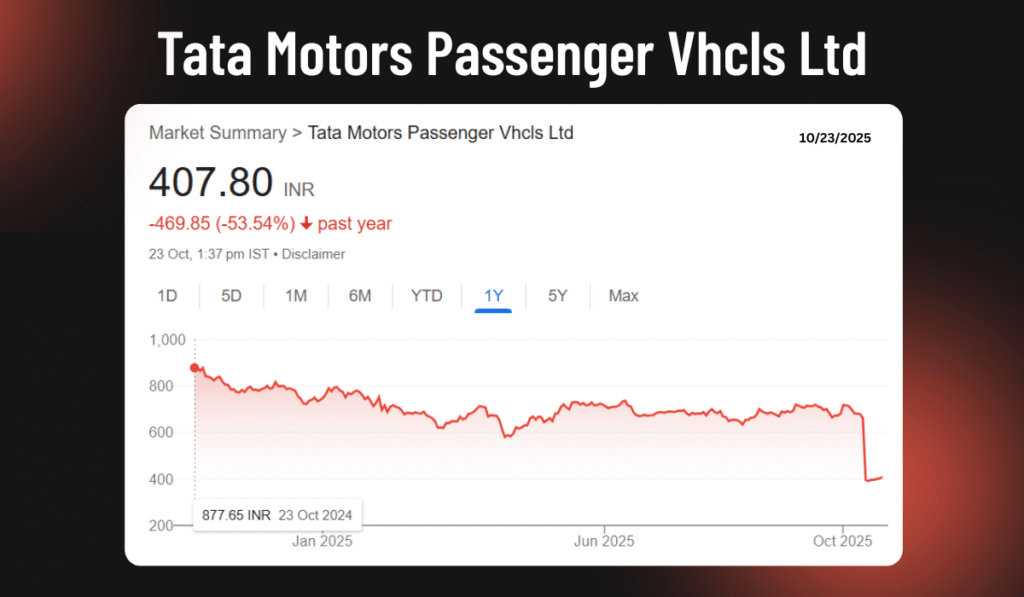
Tata Motors, one of the most influential companies in the changes automotive sector has been affected by the downfall in the shares market. The company announced that its consolidated net profit for Q2 2024 was down by 9.9%. The increase in the cost of raw materials and the problems in the supply chain were the main reasons for this decline.
Other Group Companies
In a similar vein, the Tata Group companies, such as Titan and Trent, have not been able to evade sector-specific issues. For example, Titan announced that its Q2 profit had decreased by 23% due to inventory losses following the reduction of gold import duties. The retail sector slowdown is affecting the performance of Trent’s stocks as well.
Investor Sentiment and Market Perception
Investor sentiment is one of the major keys that lead the stock to perform positively. The doubtfulness which surrounds the changes in the leadership and the internal conflicts in the Tata Trusts have driven investors to be very prudent in their decision making. Although the Tata company is still known for ethical business practices, which is a plus for the group, governance problems have stirred up quite a few questions regarding the future of the group.
It has been a year since Ratan Tata passed away and his memory as a leader with vision and a great contributor to society still lives. Nevertheless, the Tata Group is now struggling with internal issues at the level of Tata Trusts, which is causing a lot of stress for the $180 billion conglomerate. Apart from the stock prices that have been in free fall, these inner fights of the group have already dealt a heavy blow to investor confidence.
Comparison Table: Tata Group Companies Performance
| Company | Market Cap Decline | Key Challenges |
| Tata Consultancy Services | 34% | Global economic pressures, reduced IT demand |
| Tata Motors | 9.9% | Increased raw material costs, supply chain issues |
| Titan | 23% | Inventory losses due to gold import duty cut |
| Trent | 15% | Slowdown in retail sector growth |
| Tata Power | 12% | Regulatory challenges, increased fuel costs |
Broader Market Dynamics
Global Economic Pressures
The global economic environment remains a tough challenge for a lot of companies that is also the case with the Tata group. In particular, inflation, supply chain disruption, and the tense situation in the world have adversely impacted business operations and the overall mood of investors. The external pressures that come from this corner of the world have been the main reasons behind the drop-in share prices.
Regulatory Changes
The changes in government policies and regulatory requirements have a substantial effect on sectors of the Tata Group. For instance, the lowering of gold import duties has had a negative impact on Titan’s profitability, causing the company’s stock price to decline. Likewise, the imposition of regulations in power has led to the deterioration of the performance of Tata Power.
Long-Term Outlook
As a matter of fact, the tata group still has a bright future after this storm. The massive conglomerate is a good investment due to its diversified portfolio with the strong brand equity and the company’s commitment to ethical business practices serve as a solid foundation for future growth. What is more, it would be a great move to fix internal governance issues and make sure the leadership transition is smooth which will help in gaining back investors’ trust and stabilizing the stock’s performance.
Conclusion – Tata Group Decline After Ratan Tata Death
The fall of Tata Group shares after the passing of Ratan Tata is mostly due to internal governance issues, sector-specific challenges as well as broader market dynamics. The time is tough right now, but the group’s legacy and dedication to ethical business practices provide a way out. Investors are expected to be vigilant of the upcoming situation and then make a decision whether to invest in the Tata Group companies considering their long-term value.
FAQs
Q1: What impact did Ratan Tata’s death have on the shares of Tata Group?
Ans: It led to Ratan Tata’s death market uncertainty initially, which was a short-term impact of the shares of the Tata Group caused by a brief decline of the sealed conglomerate.
Q2: What are the internal issues that have a negative impact on the performance of the Tata Group?
Ans: The disagreements among the trustees of the Tata Trusts, especially concerning the succession of the leadership and strategic direction of the organization, have resulted in governance challenges and thus, a decline in investor confidence.
Q3: Which are the companies of the Tata Group that have suffered the most?
Ans: The likes of TCS, Tata Motors, and Titan have incurred heavy losses due to a mix of sectoral and internal issues causing them.
Q4: What is the future outlook of Tata Group?
Ans: Their huge diversified portfolio and strong brand equity can still keep the Tata Group going through the present difficult times and even take them to new heights but this is conditioned on the resolution of internal governance issues.