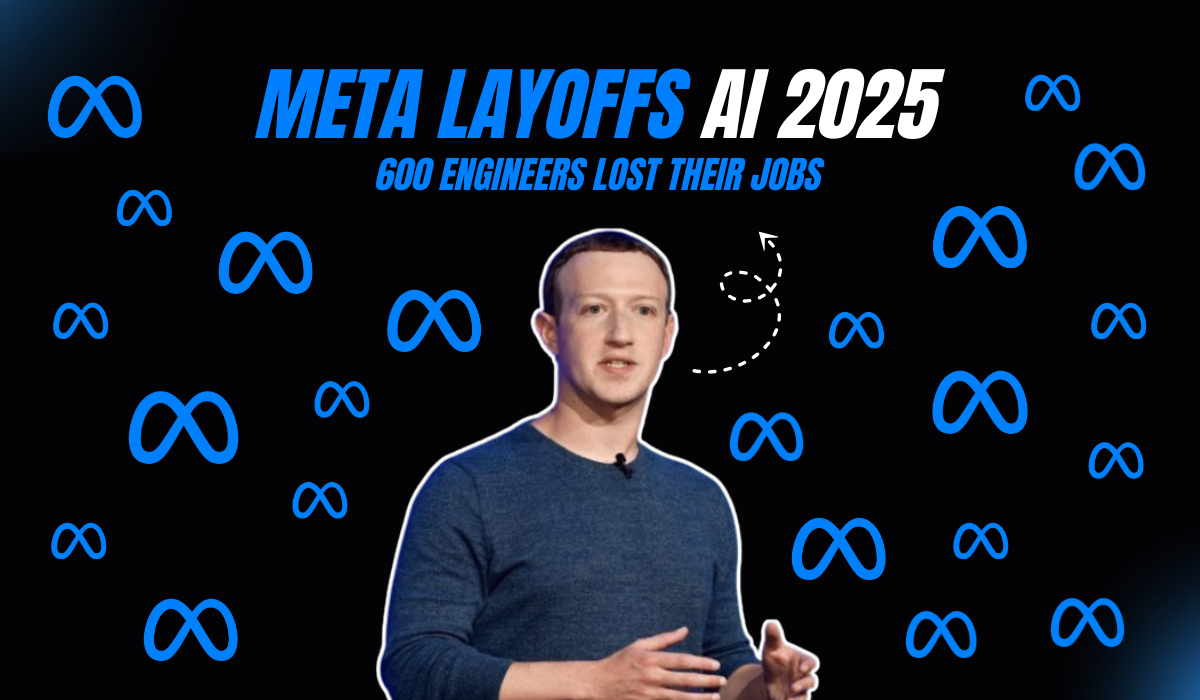
Meta Layoffs AI 2025, October revealed its plan to axe roughly 600 engineers from its AI division. On the surface, it looks like a contradiction: a company that is placing a huge bet on artificial intelligence is firing AI talents. So, what is the actual story behind the scenes?
I will explain the reasons for the layoffs at Meta AI, what it means financially and from the point of view of the organization and what you – an investor, an employee, or a tech enthusiast – should take from it. You will have the insight into the real reason behind the Meta layoffs AI 2025 after going through the article, and you will know how such decisions relate to corporate finance and tech strategy in general.
What Happened? The Facts on Meta’s AI Layoffs
The announcement
- Meta is eliminating close to 600 positions from its AI division – mainly those cuts will be across research, product AI and infrastructure teams.
- The department which is going to be affected is the so-called Meta Superintelligence Labs and FAIRE (Facebook AI Research) which is a research unit of AI Facebook).
- Notably: even though there are cuts, Meta still continues to hire in its top “TBD Lab” and commits again to AI investment.
The official reason
In a memo to staff, Meta’s Chief AI Officer, Alexandr Wang, said: “By trimming the team size, there will be less talks to reach a decision, and each member will be more load-bearing and have more scope and impact.”
Essentially: The company intends to gain speed, agility and focus with the move, not simply expand further.
Why it stands out
- While a lot of technology companies are reducing expenses, Meta is spending several billions on AI infrastructure and talent acquisition of the top tier.
- Such an action expresses a change in the company’s tactic: from wide, potentially duplicating AI activities to more concentrated, high-impact teams of talents.
- The company is wondering its staff, shareholders and the market about this: If you are investing in AI, does the dismissal of 600 engineers indicate a negative sign or a smarter move?
The Real Reason Behind the Meta Layoffs AI 2025
We should analyze the financial and strategic reasons for this decision.
1. Cost control combines with investment ambition
- Meta is investing a lot in AI: new data centers, hiring star researchers, big investments in AI startups.
- At the same time, large companies very often have redundancies: overlapping teams, slow decision-making, too many layers. Meta’s memo refers to this.
- The reduction of 600 staff members enables the company to obtain budgets and focus on the “core mission” while getting rid of dropped units that may not have been delivering as expected.
2. Strategic refocus on highest-value work
- Old research units (like FAIR) and wide infrastructure/product teams sometimes lose the focus and spread their efforts too much. Meta seems to be prioritizing the “TBD Lab” elite unit.
- From the financial point of view, this move is similar to portfolio pruning: letting go of the mid-performers and investing twice as much in the high-conviction bets.
3. Agile teams = faster revenue generation
- Meta’s AI goal is not a pure theory. It is connected with product features (ads, feed ranking, AR/VR) and future growth factors.
- Small, high-impact teams can be much quicker which, in the tech industry, means a shorter time-to-market and possibly a higher ROI.
4. Signaling to the market and internal talent
- To investors: “We are not just spending; we are spending wisely.”
- To talent: “If you are top tier, come with us. We are creating elite teams.”
- To internal teams: “We anticipate greater accountability and impact.”
What This Means Financially — For Meta and For You
For Meta (the company)
- Cost structure that is more efficient: less number of roles = less fixed cost, especially in areas that do not generate revenue directly.
- Capital allocation that is more efficient: spending shifts from maintenance to strategic growth.
- Upside potential: if the small elite AI team succeeds, the returns could be huge.
- Risks: layoffs can lower morale, cause talent flight, and if the new structure fails, it will discourage investors.
For Investors & Market watchers
- This move may be viewed as a positive one: discipline + focus = better long-term returns.
- However, investors will monitor the execution closely: how well the new teams perform, what breakthroughs they deliver, how AI investments convert into revenue and margin.
- Macro context: AI is a business where “winner-takes-most”; being the leader is what matters. Meta’s move is a bet on winning.
For Employees & Job-seekers
- Layoffs are a sign that even in high-growth industries, you are not safe if your team lacks impact or focus.
- The AI field is evolving such that talent-dense teams doing high-impact work will have the advantage over large, sprawling groups.
- As a job-seeker, try to be in units that are product impact and growth-oriented, rather than simply “research for research’s sake.”
Myth-Busting: What This Is Not
- This is not proof that Meta is deserting AI. The irony is that they are investing more.
- It is not pure cost-cutting. The cuts are in areas where new hires are being made in the high-end teams.
- It is not only about “AI replacing humans”. The story is about meta-strategy, team design, and internal structure.
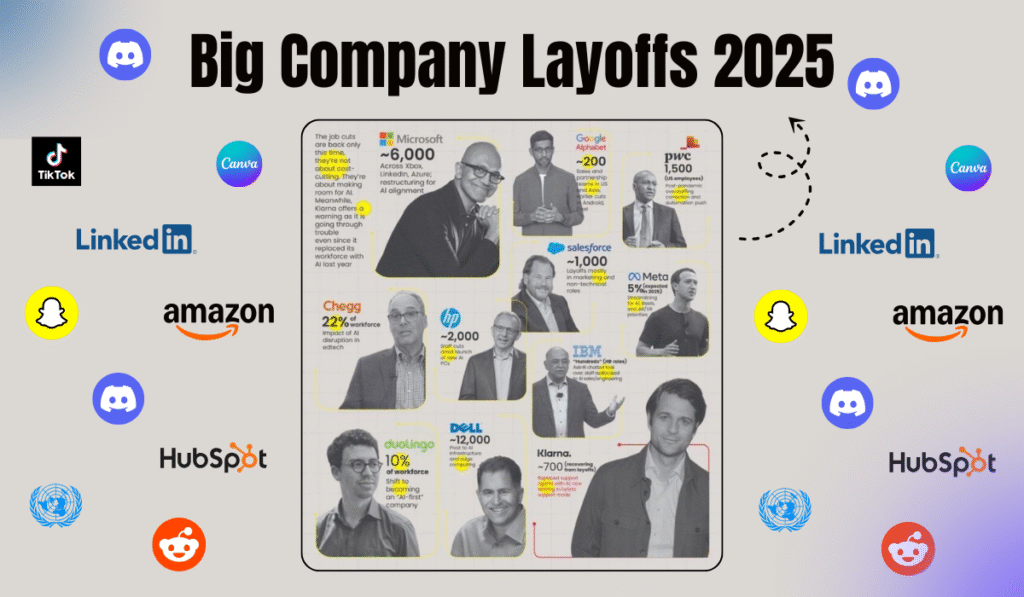
- It is not a single case of Meta – other tech companies are also shedding staff while strengthening themselves in AI.
Real-Life Example: Think of It Like Sports
Imagine a football (soccer) club.
- Before: The club had 60 players, a lot of them on the bench, some with overlapping roles, slow decision-making by the coach.
- Today: The club has 40 top players, each with clear roles, quick tactical changes, faster substitutions, higher impact per player.
- The objective: To win more games (i.e., to launch more successful products, generate revenue, dominate the tech industry). Just having a lot of players didn’t make winning obvious before.
Put in financial terms: the club is moving from a high-cost, low-efficiency model to a lean, high-efficiency model where each “asset” (employee) has a higher return potential.
Comparison Table: Old vs New AI Structure at Meta
| Feature | Old Structure (Legacy AI Teams) | New Structure (Talent-Dense Focus) |
| Team size | Larger teams, many layers | Smaller teams, fewer layers |
| Decision speed | Slower—many conversations | Faster—leaner decision-making |
| Focus | Broad research + product + infrastructure | High-impact projects, product integration |
| Cost per unit | Higher fixed overhead (many roles) | Lower overhead, higher efficiency |
| Risk/reward | Moderate risk / moderate reward | Higher risk (bets are bigger) / higher reward potential |
| Visibility of impact | Harder to track individual impact | Clearer impact and accountability |
Actionable Steps for You
Regardless of you being an investor, employee or simply a person who is interested in finance and tech, here is what you can do:
If you’re an investor or saver
- Check achievements, not only statements: See Meta’s next quarters, AI product introductions, margin enhancements.
- Benchmark Meta’s plan against competitors (Google LLC, Microsoft Corporation) – how streamlined and focused are their AI teams?
- Think about risk: A big AI bet can result in huge profits, but also losses. Don’t put all your money into “AI winners”.
- Seek for indicators: AI features revenue, data centers cost, margins getting better over time.
If you’re an employee or job-seeker
- Assess team alignment: Is your team working on the core product, high impact? Or on the fringe?
- Improve skills which are closely linked to value: AI/ML proficiency, product integration, agile development, outcome measurement.
- Keep up with industry trends: layoffs like this are a stark reminder that even “hot fields” can be affected by restructuring.
- Prepare strength in change: Having the option to move within a company (Meta has internal transfers) or changing to a high-impact unit would be beneficial.
If you’re learning finance/tech
- Consider this a learning opportunity: It clearly demonstrates the interconnection of strategy, finance, and organizational design in big tech.
- Have a list of questions ready: Why restructure now? What returns does Meta expect? How does this affect cash flow, talent cost, competitiveness?
- Don’t forget the big picture: Large cost = large investment. Efficiency move = better future returns.
Why This Story Matters for 2025 and Beyond
- Artificial intelligence is becoming a major factor in the way technology companies create value. This is true both for AI as a product and as part of the infrastructure.
- However, big companies (on the face of it) do not necessarily succeed. What the example of Meta teaches us is that success depends on the factors of focus, agility and team design.
- As a whole, this is indicative of a change of paradigm of how companies are constructing their AI and making their investments in it, moving away from “spray and pray” to placing more strategic bets.
- On the markets side: shareholders have to carry out a deeper analysis beyond reading only the headlines such as “600 layoffs”. They should be asking: what’s the strategy here and what will be the resulting payoff?
- On the other hand, individuals should pay attention to the skills and roles that will come out as winners in tech, which are those that are associated with teams that are highly impactful and outcome-driven.
Conclusion
The truth behind the headline “Meta layoffs AI 2025: 600 engineers lost jobs” is that there is no real retreat of AI. Actually, what we see is Meta recalibrating: it is cutting off the excess to sharpen the core. By concentrating on smaller, elite teams, Meta intends to speed up decision-making, lower the cost of the overhead, and increase the impact.
As an investor, employee, or learner, this is a signal to you that it is execution that you should be looking at, and not merely the announcements. Also, pose these questions: In what manner is the firm utilizing its resources? How are the different teams organized in order to be fast and impactful? For the development of your career, go for positions that have a clear connection with product value and company strategy.