
Investing in 2025, seems to be complex but with the right habits, good decision and deep knowledge anyone can grow their wealth confidently. These 10 habits can turn normal people into successful investors just by following consistency. At the beginning everyone faces confusion and fear of losing money, but don’t worry we will help you to grow with us.
If you want to become a successful investor then you have to think and behave like a successful investor. In this article, we’ll share 10 practical, habits that turns an ordinary investor into a pro investor.
Real Life Practical Habits That Turn Normal People Into Successful Investors – Explore
Habit 1: Clear Financial Goals
Before starting investment, ask yourself why you want to invest? Or what you want to achieve? Or Is this investment is for buying a home? Or this investment is for retirement? Or this investment is for your future education? Make your goal clear and then only start – without any goal you can’t achieve it.
Make your goal clear, then only start – without any goal you can’t achieve it.
- Make a list of short term goals and long term goals.
- Analyze how much investment you need.
- Annually review your goals and update as per the need.
Habit 2: Continuously Educate Yourself
Without investment knowledge, any good investment can turn into worse. If you want to understand the market you have to be knowledgeable and active. Investments like stocks, bonds and mutual funds need a good understanding of the market in both short and long term investment.
- To educate yourself about investment you can use trusted resources like: Investopedia, Online Finance Tips or Forbes.
- Explore YouTube and other platforms to gain knowledge.
- Focus on yourself to achieve small goals at starting.
Habit 3: Be Consistent with Small Steps
Don’t run to make money, because everyone is making the same mistake. Take small steps and celebrate your each achievement this will boost your confidence and help you to grow your wealth over time. Even ₹500 monthly investment can build wealth over time.
- For better consistency make your investment automated.
- Consistency beats trying to time the market.
Habit 4: Diversify Your Portfolio
If you put all your money in one place then risk will be more but if you spread your investment into multiple good investments then the risk will be lower. You can explore stocks, bonds, gold, and real estate.
- Mix assets based on age and risk tolerance.
- Diversification protects during market ups and downs.
Habit 5: Avoid Impulsive Decisions & Control Your Emotions
If you are a long term investor, then don’t check your portfolio regularly, because seeing market position up and down gives you more chances where you can make impulsive decisions. Don’t panic, trust your investment and avoid impulsive decisions.
- Focusing on long-term results to avoid Impulsive Decisions.
- During Volatility – Stick to your plan.
Habit 6: Use Technology Wisely
Use advanced trusted apps and platforms to ease your investment journey. These platforms provide deep research and different points of views, so that you can make better decisions.
- Use apps and AI to know the market well.
- Use apps to track & research investments.
- Automate alerts for portfolio updates.
Habit 7: Rebalance and Review Periodically
Check your portfolio every 6 months, and then make changes in your investment if you feel any need. Always check your investment whenever the government changes or any tariff will come.
- Sell overweight assets.
- Buy undervalued ones to maintain your strategy.
Habit 8: Learn from Mistakes and Stay Humble
Keep learning from your mistakes and try to avoid these in future. To grow long term, learning from your mistakes is important.
- Analyze what went wrong without blame.
- Seek advice and adjust your strategy.
Habit 9: Prioritize Tax Efficiency
Always check taxes and hidden charges, because it will eat your return without knowing you. Before doing any investment focus on these things and choose those apps or platforms which charge less.
- Use tax-advantaged accounts like PPF or NPS.
- Harvest losses strategically.
Habit 10: Build an Emergency Fund First
Investment is important but before that you have to build an emergency fund, because if you don’t have any emergency funds then an unplanned emergency situation can eat your investment.
- Keep it liquid and safe.
- This fund prevents forced selling.
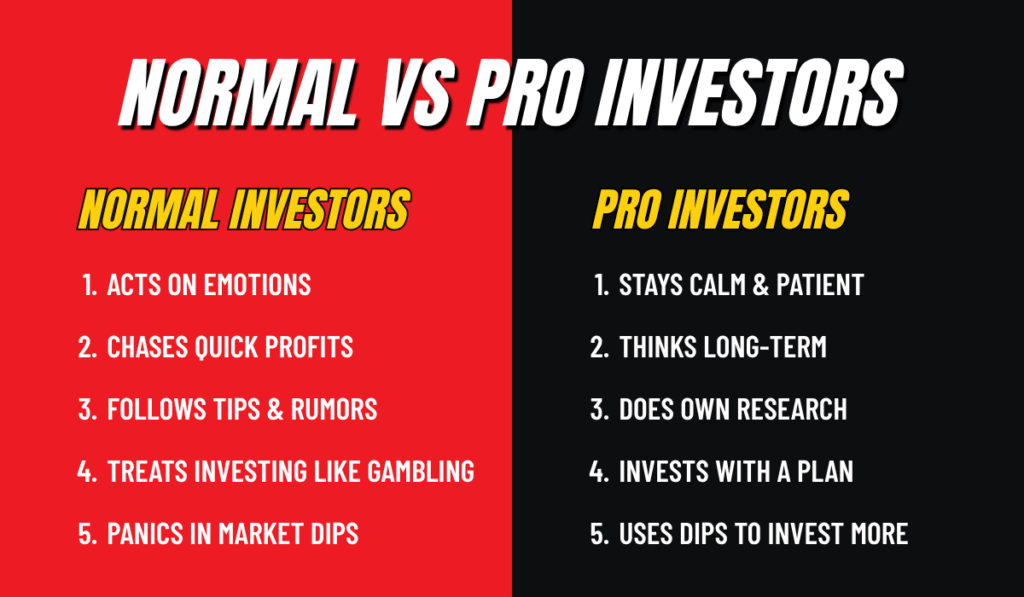
Comparison Table: Beginner Practices vs. Successful Investor Habits
| Habit | Beginner Investors | Successful Investors |
| Goal Setting | Vague or no goals | Clear, measurable goals |
| Learning | Minimal, reactive | Continuous, proactive learning |
| Investment Amount | Large lump sums or irregular | Start small, invest regularly |
| Portfolio Diversification | Concentrated in few assets | Well diversified across classes |
| Emotional Control | Impulsive buying/selling | Patient, sticks to plan |
| Technology Use | Basic tools or none | Leveraging apps and automation |
| Portfolio Review | Rare or reactive | Scheduled, strategic rebalancing |
| Mistake Handling | Denial or panic | Reflect, learn, adapt |
| Tax Planning | Ignored | Actively managed |
| Emergency Fund | Overlooked | Established before investing |
Real-Life Example: Shikha Journey to Smart Investing
Shikha, a 26 year old teacher, started a systematic investment plan to invest ₹1,000 per month in an index mutual fund. She initially halted investments and panicked during market declines.
She developed a six-month emergency fund and automated monthly investments after learning to diversify and be consistent. Her portfolio grew steadily over the course of five years, far outperforming a basic savings account. Rina’s success resulted from her gradual adoption of disciplined habits.
Myth Busting
Myth: You need a lot of money to start investing.
- Small, consistent investments leverage compounding to grow wealth over time.
Myth: Investing is gambling.
- Strategic, informed investing with patience is the opposite of gambling.
Myth: Timing the market is key.
- Time in the market beats timing the market.
Actionable Steps to Start Now
- Put your financial objectives in writing.
- Create an investment account that is suitable for beginners.
- Select inexpensive ETFs or index mutual funds.
- Establish a monthly automatic contribution.
- In addition to investing, create an emergency fund.
- Plan to review your portfolio every six months.
Conclusion
These simple but useful habits will help you to start your investment journey. Set clear goals, keep educating yourself, spread your investment nicely, and keep yourself motivated. Use advanced AI tools to make your investment journey easy. Begin small, keep going, and make changes as you get bigger.
Are you prepared to create your future? Choose one habit from this list and start practicing it right now. For additional reading, check out Investopedia, Online Finance Tips or Forbes.